




Engineered Wood Flooring: Your Complete Guide to Benefits, Construction & Choosing the Right Floor
2025-09-12, Laura Nieto
Share:
Anyone shopping for new floors has probably heard the term "engineered wood flooring" and wondered how it’s different from traditional hardwood floors. This guide walks you through everything you need to know about engineered hardwood floors, from construction and benefits to how they compare with other flooring options.
What is Engineered Wood Flooring?
Engineered wood flooring consists of multiple layers of wood pressed together, with a top layer (veneer) of premium hardwood like white oak over a core of sustainable, fast-growing wood like acacia or poplar. This layered construction creates engineered hardwood floors that are more dimensionally stable than solid hardwood while maintaining the authentic beauty of real wood. (“Dimensionally stable” means they don’t expand and contract as much in response to changes in the home environment.)
Unlike solid hardwood that's cut from a single piece of wood, engineered hardwood floor planks use this multi-layer design to maximize the use of premium hardwood trees. In fact, engineered wood floors can yield up to four times more flooring from each hardwood tree compared to solid planks. So, not only are they stronger and more durable, they’re also more environmentally responsible.
What is Engineered Wood Made Of?
The typical construction of engineered hardwood includes:
- Top Layer (Veneer): Premium hardwood like oak, maple, or hickory (typically 2-4mm thick)
- Core Layers: Sustainable woods like acacia or poplar arranged in cross-grain patterns
- Backing Layer: Provides additional stability and moisture resistance
This engineered hardwood construction creates floors that resist expansion and contraction better than solid wood, making them suitable for areas with temperature and humidity fluctuations – which most homes experience due to changing seasons.
Is Engineered Wood Better Than Hardwood Floors?
The answer depends on your specific needs, but engineered wood flooring offers several advantages over solid hardwood:
Dimensional Stability: Engineered wood floors are less likely to expand, contract, or gap due to their layered construction.
Installation Versatility: Can be installed over concrete subfloors and in basements where solid hardwood isn't recommended.
Environmental Benefits: Uses wood resources more efficiently, getting more flooring from each tree. Learn more about Sustainable Flooring Options here.
Cost Efficiency: Often more affordable than solid hardwood while delivering the same look.
Moisture Resistance: Better suited for kitchens and areas with moderate moisture exposure.
It’s worth noting that solid hardwood can be refinished more times throughout its lifetime, though engineered floors with thick veneers can also be refinished when needed. Plus, if you opt for a quality engineered hardwood, like a collection from CALI, planks will be protected by a premium aluminum oxide finish, which is covered by the warranty and should never need to be refinished!
Engineered Wood vs Other Flooring Options
Engineered Wood vs Laminate Flooring
Is engineered wood better than laminate flooring? It depends on what you’re looking for, but in most cases, yes. Here's why:
- Real Wood: Engineered hardwood features genuine wood veneers, while laminate uses photographic images. Even with a highly realistic luxury laminate, it’s hard to beat the real thing.
- Durability: Quality-engineered wood floors often last longer than laminate. That being said, a quality luxury laminate will be waterproof and capable of being installed in kitchens and bathrooms.
- Resale Value: Real wood flooring typically adds more value to your home than a synthetic floor like laminate or vinyl.
What about Engineered Hardwood vs LVP?
Engineered hardwood and luxury vinyl plank (LVP) serve different needs:
Engineered Hardwood:
- Real wood construction
- Can be refinished
- Natural material with authentic grain patterns
- Higher resale value
LVP:
- 100% waterproof
- Lower cost
- Easier DIY installation
- Better for high-moisture areas
Which is Better: Engineered Wood or Real Wood Flooring?
The choice between engineered and solid hardwood depends on your priorities:
Choose Engineered Wood If:
- You want stability in varying climates
- Installing over concrete or in basements
- You prefer a more sustainable option
- Budget is a consideration
Choose Solid Hardwood If:
- You plan to refinish multiple times (not typical)
- You want maximum thickness for longevity
- You're installing over wood subfloors only
- You prefer traditional construction
Negatives of Engineered Wood Flooring
While engineered hardwood floors offer many benefits, consider these potential drawbacks:
Limited Refinishing: Thinner veneers (under 2mm) may only allow one refinishing, while thicker veneers allow more. Again, if you select a floor with a quality aluminum oxide finish, this shouldn’t be a concern.
Quality Varies: Lower-grade engineered floors may have very thin veneers that don't last as long. Make sure you check the veneer thickness and opt for a floor with a high-quality finish.
Moisture Sensitivity: While more stable than solid wood, engineered floors still shouldn't be exposed to standing water. This is true of any floor that contains a natural material. See CALI Waterproof Flooring options here.
Veneer Damage: If the top layer is damaged through the veneer, repair can be challenging.
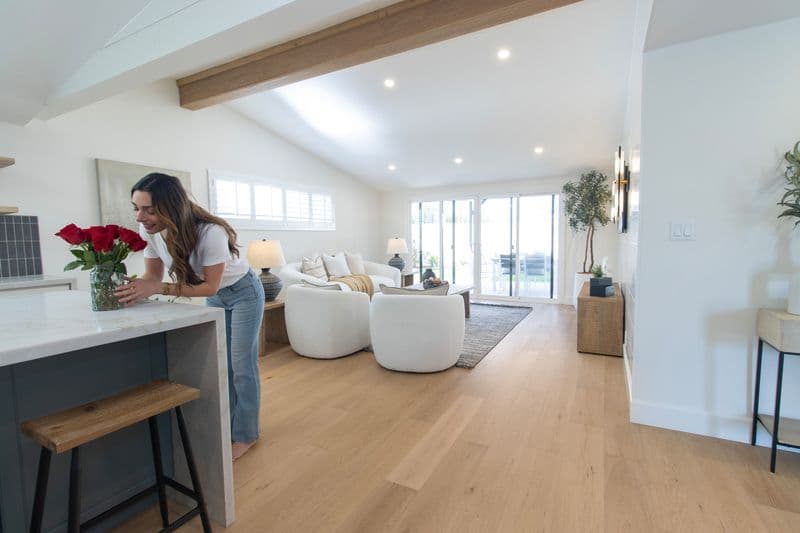
CALI Engineered Hardwood Collections
All CALI hardwood planks are engineered, featuring sustainable cores with premium hardwood veneers protected by aluminum oxide finishes and backed by 50-year residential warranties.
Entry-Level: Barrel Collection
Our top-selling Barrel collection offers European white oak in popular color families at exceptional value. Planks measure up to 74-13/16" long, 7.5" wide, and 0.5" thick with 2mm veneers.
See Barrel Engineered Wood Floors>
Upgraded Options: Whiskey & Wine and Varietals
Whiskey & Wine presents floor pairings with varying textures - Winestyles offers smoother grains for modern spaces, while Whiskeyfloors add character with extra knots and texture – perfect for and bedrooms. Planks extend up to 94-1/16" long, 7.25" wide, with 2mm veneers.
See Whiskey & Wine Engineered Wood Floors>
Varietalsfloors go beyond traditional white oak and celebrate unique wood species, including ash, acacia, hickory, and maple. Planks are left unstained to showcase their natural character. Planks measure up to 74-13/16" long, 7.5" wide, with 2mm veneers.
See Varietals Engineered Wood Floors>
Premium Collections: Cellar and Meritage
Cellar features select A-B grade European white oak with cleaner visuals and minimal knots for a refined, Northern European aesthetic. Planks measure up to 82-11/16" long, 7-7/8" wide, with 3mm veneers.
See Cellar Engineered Wood Floors>
Meritage, our most premium collection, offers Euro-sawn European white oak inspired by Napa Valley winemaking craftsmanship. Planks measure up to 86-5/8" long, 9.5" wide, and 9/16" thick with 4mm veneers.
See Meritage Engineered Wood Floors>
Engineered wood flooring represents an excellent balance of beauty, performance, and sustainability. Whether you choose an entry-level collection like Barrel or a premium option like Meritage, engineered hardwood floors provide the authentic look and feel of real wood with enhanced stability and efficient resource use.
The key is selecting engineered wood floors with adequate veneer thickness and quality construction to ensure long-lasting beauty and performance in your home.