












Cork Flooring Installation

VIEW OR DOWNLOAD:
Cork Installation Guide
VIEW OR DOWNLOAD:
Cork Installation Guide
Pre-Installation
Pre-Installation
Before you begin installation, remember to P.A.C.E. yourself with the checklist below.
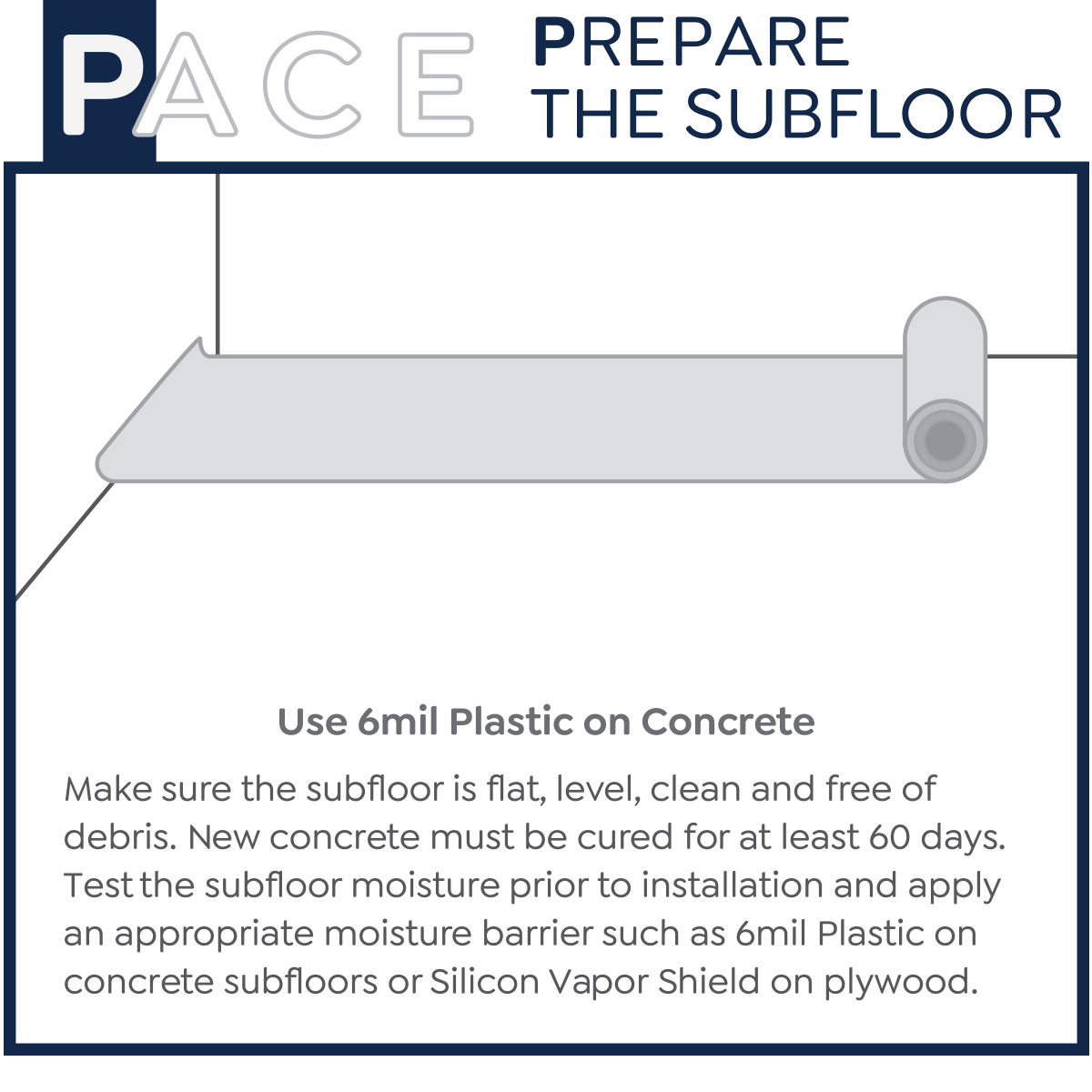


Prepare Job Site, Acclimation, Control Subfloor Moisture, Environmental Conditions
Quick Tip! Proper installation and maintenance are key elements in achieving best flooring results. It is the responsibility of the installer/owner to follow all guidelines provided by CALI for success. Please read through this document completely.
Important Pre-Installation Notes
Note: Flooring not used for its intended purpose will not be covered under warranty.
The following information provided by CALI is intended to serve as a reference guide only. Please carefully read CALI’s installation, maintenance and warranty documentation prior to installation. Follow the National Wood Flooring Association (NWFA) Installation Guidelines when installing your floor.
- Upon ordering Cork floor materials, consider adding an additional 5% to allow for cutting waste and grading allowance.
- CALI flooring is manufactured in accordance with accepted industry standards, which permit manufacturing, grading and natural deficiencies not to exceed 5%. If more than 5% of the material is unusable, do not install the flooring. Immediately contact the distributor/retailer from which the flooring was purchased. No claim will be accepted for materials with visible defects once they are installed. Installation of any material serves as acceptance of the material delivered.
- Installer/Owner assumes all responsibility to inspect all flooring before installation. Planks deemed unacceptable in appearance can be placed in closets, near walls or simply not be used. Pieces with glaring defects that can be seen from a standing position should be cut off or not be used as use constitutes acceptance.
- It is the responsibility of the installer/homeowner to determine if the jobsite conditions, environmental conditions and sub-floor are acceptable for the installation of CALI Cork flooring. Prior to installation, the installer/owner must determine that the jobsite meets or exceeds all applicable National Wood Flooring Association Installation Guidelines. CALI does NOT warrant against failure resulting from or connected with the subfloor, job site damage, or environmental deficiencies after installation.
- CALI makes no warranty or guarantee of the quality of the chosen installer’s work or of a particular installation performed by him or her. CALI disclaims all liability for any errors or improprieties in the installation of its products by an installer.
- Floor noise is normal and will vary from one installation type to the next. Occasional noise is due to structural movement and may relate to sub-floor type, flatness, deflection, changes in environmental conditions, relative humidity and/or the amount of topside pressure applied to the flooring. For these reasons floor noise is not considered a product or manufacturer defect.
- Prior to installation, it is the installer’s responsibility to document all jobsite conditions and measurements including the installation date, site relative humidity, temperature, and subfloor moisture content. This information must be retained by the installer and left with the property owner as a permanent record. For a complete list of points to address prior to installation, refer to the NWFA Jobsite checklist.
- Do not install flooring under permanent or fixed cabinetry.
- Never nail or screw anything through a FLOATED floor.
- Cork Floating floors are intended for indoor use only.
- Transport and store cartons in lay down, flat position.
- Stack boxes no more than 6 cartons high. Keep away from direct sunlight.
- Allow flooring to acclimate, unopened, in original packaging as close to the installation area as possible for at least 48-72 hours prior to installation.
- Room temperature must be at least (65ºF) before and during installation. Relative humidity should be maintained between 35% – 65% for optimal performance.
Control Home Conditions Accordingly – Acclimation should occur at normal living conditions. Before opening the cartons, the indoor environment should reflect the room temperature and relative humidity levels expected to be present before, during, and most importantly, after installation. Operate temperature / humidity control systems as normal. Allow normal ventilation through rooms. Room temperature and relative humidity must be consistent with year – round living conditions for at least 5 days prior to installation.
Prior to Installation of CALI Flooring
Job Site Preparation
Prior to installation, inspect planks in daylight for visible faults/damage. Check if subfloor/site conditions comply with the specifications described in these instructions. If you are not satisfied do not install, and contact your supplier. CALI is not responsible for flooring that is installed with visible defects.
Before laying: Measure the room at a right angle to the direction of the planks. Planks in the final row should be at least 1/3 the width of a plank. Due to this rule, planks in the first row can be cut to smaller size. Shuffle planks in order to obtain a pleasant blend of shades. Lay planks preferably following the direction of the main source of light. Over wood subfloors, we recommend laying the planks crossways to the existing joists. Planks must not be nailed or screwed to the subfloor. Skirting boards must not be fixed in a way which restricts the movement of the floor.
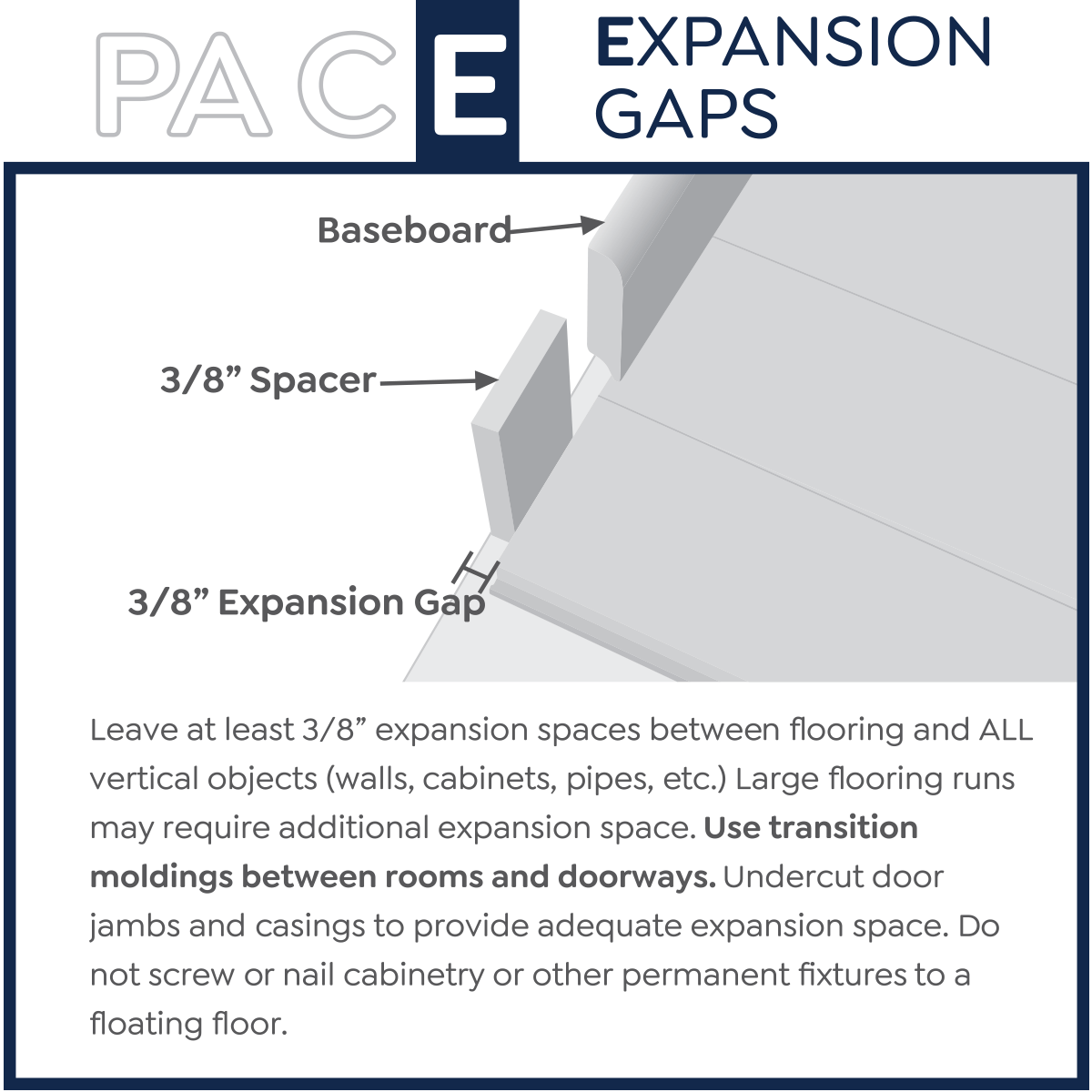
Expansion gaps: Since cork can expand with any increase in moisture content, we require leaving at least 3/8” expansion space between flooring and all vertical objects (walls, cabinets, pipes, etc.). If the installation area exceeds 30 feet, a greater expansion space is required; approximately 1/16” for every additional ten (10) feet. If the floating installation flows into other rooms, a T-molding must be used in doorways and openings between rooms (halls, archways, etc.) to allow separate areas to move without interference. We consider a doorway or opening any area that is 3 feet in width or less.
- Note that proper expansion space depends not only on the size and flow of the installation, but also on expected seasonal changes in temperature and humidity that may cause the flooring to gain or lose moisture content over time. For example, if an installation takes place when humidity conditions are low, it’s likely that the cork flooring will gain moisture and expand later during humid seasons. In those cases, incorporate additional expansion space through use of spacers or transition moldings.
- If the installation area exceeds 30 feet, a greater expansion space is required; approximately 1/16” for every additional ten (10) feet. If the floating installation flows into other rooms, a T-molding must be used in doorways and openings between rooms (halls, archways, etc.) to allow separate areas to move without interference.
- Cork floors must be able to expand/contract without interference. NEVER install flooring against any vertical or fixed object such as fireplace, columns, islands, door jambs, floor outlets, etc. Failure to follow this guideline may result in tenting, separation or buckled floors. Do not install cabinets or other permanent fixtures on top of the floor. Never nail or screw anything through a FLOATED floor. It is never recommended to put objects or furniture weighing over 500lbs on top of a floating floor.
- Undercut door casings and jambs. Remove any existing base, shoe mold or doorway thresholds. These items can be replaced after installation. When undercutting door casings the installer should confirm there is the recommended expansion space. The floor must have 1/16” clearance under the door casing to be able to float freely without vertical restriction. The installer should ensure that the plank can move freely under the door jamb.
- To cover your expansion space, CALI carries coordinating flooring moldings that include reducers, t-moldings, quarter rounds and thresholds. Coordinating stair nosing are also available. CALI also provides all the adhesives you will need to complete your project. Please visit CALI’s Marketplace webpage.
Subfloor Requirements
General
- Floating floors can be laid on top of most hard surfaces (e.g. concrete, ceramics, wood)
- Soft subfloors (e.g. carpets) must be removed
- The subfloor must be level – Flat to 3/16” per 10-foot radius
- The subfloor must be clean = Thoroughly swept and free of all debris
- The subfloor must be dry
- The subfloor must be structurally sound
Acceptable Subfloor Types
- CD Exposure 1 plywood (grade stamped US PS1-95)
- OSB Exposure 1subfloor panels (grade stamped US PS1-95)
- Underlayment grade particleboard
- Concrete slab
- Existing wood
- Ceramic tile
- Resilient tile and sheet vinyl
Acceptable Subfloor Thickness Requirements
| Joist System Spacing (inches on center) | Minimum Thickness |
| 12” | 5/8” |
| 12” to 16” | 3/4” |
| 16” to 19.2” | 7/8” |
| 19.3” to 24” | 1-1/8” |
Wood subfloors: Use moisture meter to test wood subfloor moisture content. If results show moisture vapor at or exceeding 12%, determine its source and correct problem. Do not install the floor without a vapor barrier. CALI always recommends using a moisture/vapor barrier, especially if the moisture content of the flooring and subfloor vary greater than 3%.
Quick Tip! If your plywood, OSB or particle board subfloor is reading higher than 13% MC it is advised to find and correct the source of moisture intrusion before continuing installation. CALI is not responsible for any damage caused by moisture intrusion.
Concrete Subfloors: Concrete subfloors must be fully cured and at least 60 days old, preferably 90 days old. If leveling is needed, grind down high spots and level low spots with a Portland based leveling compound. Slabs must be free of hydrostatic pressure.
Quick Tip! When laying 6 mil plastic it is always advised to overlap the seams at least 6” and cover all seams with duct tape.
Ceramic Tile, resilient tile and sheet vinyl must be well-bonded to subfloor, in good condition, clean and level. We do not recommend sanding existing vinyl floors, as they may contain asbestos. We do recommend filling any grout lines or embossing with a compatible patch compound. Any damaged caused by skipping this step will not be covered by CALI.
Crawlspaces must have a minimum of a 6-mil polyethylene sheeting covering any exposed earth. Crawl spaces must have adequate ventilation and a minimum of 18” of air space between the ground and the floor joist.
Moisture/Vapor Barriers are required when installing cork flooring. It is the customer’s/installer’s responsibility to check the subfloor for moisture prior to installing the floor. Always install a moisture barrier capable of protecting the amount of moisture coming from the subfloor. Moisture intrusions from concrete hydrostatic pressure, flooding, or plumbing leaks, along with high levels of alkalinity, can affect the floor over time. Moisture can also be trapped below the flooring and create mold or mildew. The installer, not CALI, is responsible for making sure the concrete moisture and alkalinity are suitable prior to installing this floor.
Radiant Heat Systems
CALI flooring is only recommended for use over radiant heat systems if the special requirements specified by the National Wood Flooring Association are met (please refer to the NWFA’s Radiant Heat Guidelines). Ensuring stable job site conditions, subfloor suitability and proper acclimation are especially important when installing over a radiant heat system. It is the responsibility of the installer to ensure that the recommended environmental conditions are met for installation. Refer to your radiant heat system manufacturer to determine its compatibility with bamboo flooring, and to learn the specific requirements for installation.
- Because of the wide variety of systems on the market (Hydronic, embedded in concrete, electrical wire/coil, heating film/mat) each with its own features and applications it is recommended that the user consult with the radiant heating provider for best practices, installation methods and proper subfloors.
- The floating installation method is the only method recommended for use with radiant heat systems.
- Radiant heat system must be turned on and in operation for at least one week before installation.
- The flooring must be acclimated per CALI’s required acclimation instruction over the radiant heat with the system turned on throughout the acclimation timeframe.
- The system must be turned down to 65°F and maintained 24 hours prior to installation.
- Once install is complete, turn system back on and slowly bring back up to normal operating temperature over a period 4-5 days.
- Floor should never be heated over 82°F. Consult with your radiant heating system manufacturer to successfully limit the maximum temperature.
- Always remember that rugs placed over radiant heated flooring can increase the surface temperature in that area by 3°- 5°F degrees.
- Relative Humidity must be maintained between 35-65%. The use of a humidifier may be necessary to achieve this.
- When turning off the radiant heat system it must be turned down slowly at a rate of 1.5° degrees per day. You should never just turn the system off.
- For additional information on radiant heating systems please refer to http://www.radiantpanelassociation.org or the NWFA’s Radiant Heat Guidelines.
Floating Installation Method
Floating Installation Method
Recommended Floating Click-Lock Floor Tools
|
|
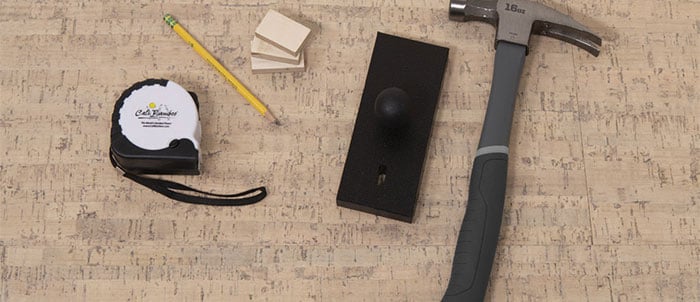
Installing the First Row
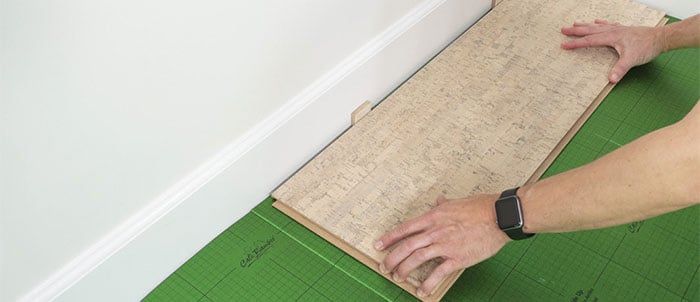
Step 1
Starting from the right with the tongue-side facing the wall, carefully place the first board in place, using spacers to leave a expansion gap between wall and edges of the plank.
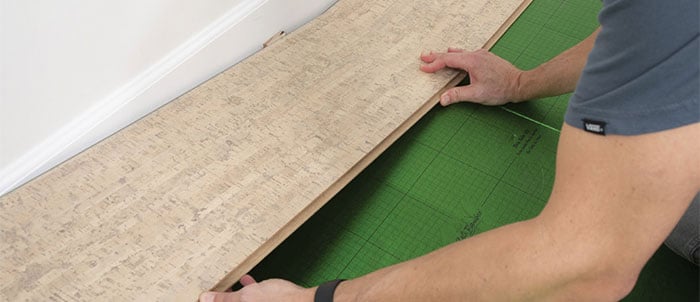
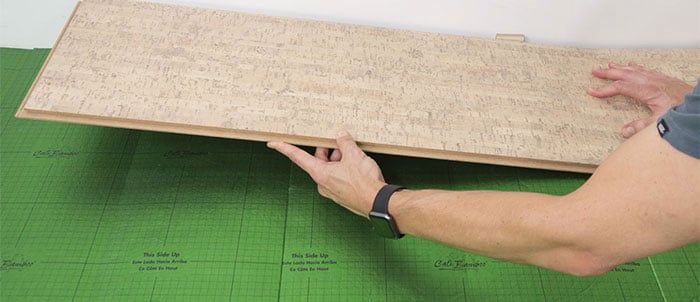
Step 2
Install the second piece by aligning the butt end with the end of the first piece at a 45 degree angle. Softly push the second piece down until the tongue and groove lock together to secure the joint on the ends. Make sure that the long sides of the two boards form a straight line. Continue in this manner until reaching the final board in the first row.
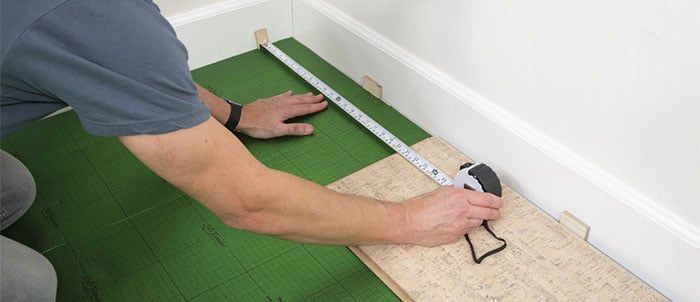
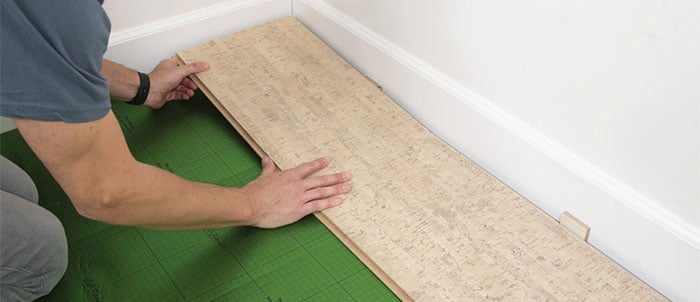
Step 3
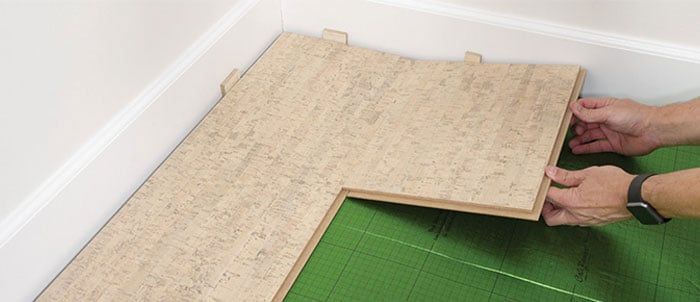
Cut the final board piece to length and install it in the same manner as the previous piece. Use the extra cut piece to start your next row if it is longer than 12″
Next Steps:
Step 1
If the cut plank is at least 12″ in length, it can be used as a starter piece in your next row. When laying the next row and future rows, make sure that there is at least 8″ between the plank end joints on adjacent rows. Avoid an “H” pattern by varying the size of your starter piece. For a natural look rows and patterns should be staggered.
Step 2
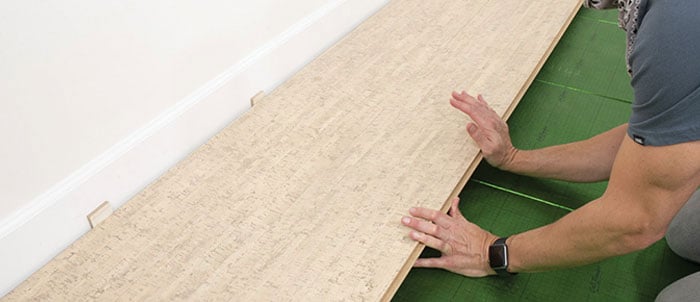
Position the first board of your new row in place by angling it up slightly, pushing forward and interlocking the side tongue along the previous row. The long side of the plank should fit snug and lay flat.Place the butt end seam of the second piece at an angle against the previously installed plank and fold down.
Quick Tip! Use a tapping block and hammer if needed to ensure engagement along the length of the plank. Avoid excessive force as it will cause the plank seams to peak. Any gapping can affect the whole floor, so you want to make sure to ensure a tight fit for every plank.
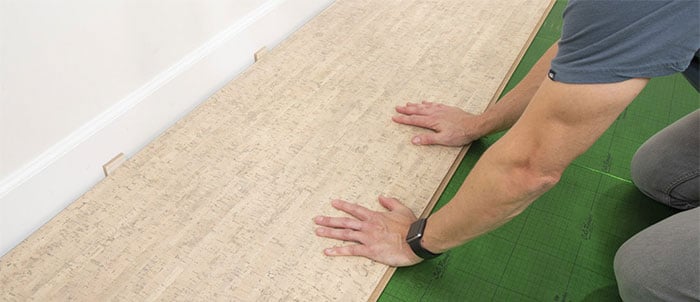
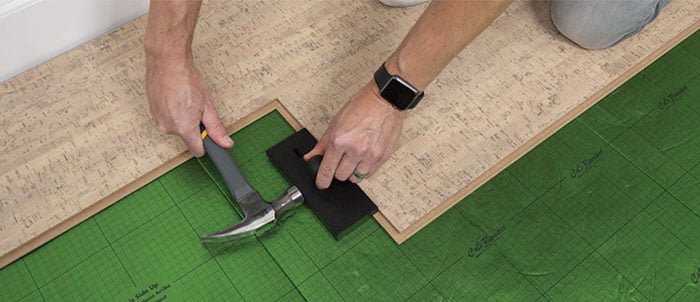
Step 3
Ensure that it is engaged. Then lift the floorboard (together with the previously laid planks in that row) lightly up and push it against the adjacent row and then lay it back down. You may have to lift several planks at once to engage the row. TROUBLE SHOOTING OPTION: Engage the long side of the second plank and then slide towards the butt end seam of your starter plank until the tongue rests near the groove. Use a tapping block and hammer at the end of the plank (exposed butt end seam) to engage the ends of the planks together. Only tap the top edge of the plank so that you do not damage the clicking mechanism.
Quick Tip! When properly engaged, boards will lay flat. Do not force the planks to engage when they are not properly seated. Disengage the planks and realign them. Lifting the row slightly and using a tapping block will help ease the engagement.
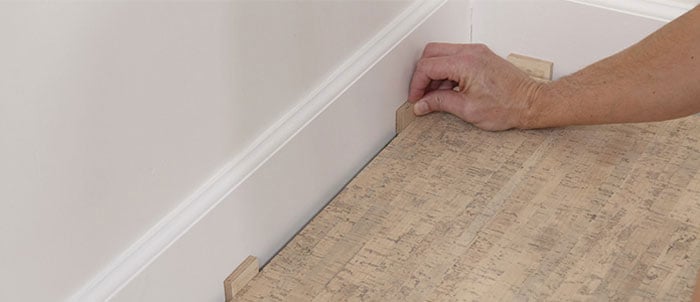
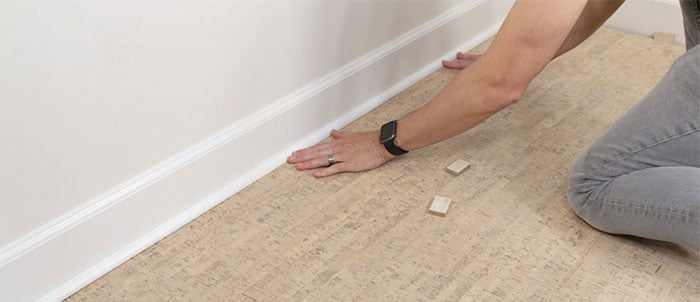
Step 4
Use a pull bar and a hammer to engage the final plank in the row. Insert a spacer to ensure proper expansion space is left. Continue installing the rest of the rows in the same manner.
Care & Maintenance
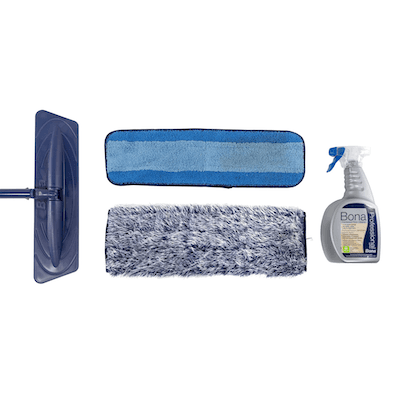
- For general cleaning, dry or damp mop as needed using Bona Stone Tile & Laminate Floor Cleaner or something similar.
- Never use a steam mop or wet-mop as standing water may cause permanent damage and the heat from the steam mop may dull the finish. The moisture from the dampened mop should evaporate off the floor quickly.
- Although Cali Cork is water resistant, it is still a best practice to avoid excess moisture on the floor. Therefore, we recommend soaking up spills immediately using a dry towel or dry mop.
- CALI Cork floors, like all cork flooring, are subject to changes in temperature and humidity. As a general rule, flooring will perform best when the interior environment is controlled to stay within a relative humidity range of 35%-65% and a temperature range of 60° to 80° Fahrenheit. Seasonal fluctuations in relative humidity may cause the cork flooring to gain moisture with periods of high humidity and lose moisture during low periods of humidity. During warm, humid weather, cork expands and during dry weather, cork contracts. These changes may be noticeable but can be minimized by using an HVAC system to maintain relative humidity between 35%-65%. This seasonal movement is a normal characteristic of cork flooring and is not considered a defect. It is the owner’s responsibility to maintain appropriate conditions via the use of a humidifier and/or de-humidifier. Ventilation, humidity, and temperature control is a must even when the home is not occupied.
- To clean up dried glue use either Bostik Ultimate Adhesive Remover or Titebond Adhesive Remover cleaning wipes.
Preventative Care
- Vacuum or sweep the floor with a broom or dust mop on a regular basis or as needed to remove dirt, sand, or grit to protect the floor from scratches. A grain of sand has dozens of sharp edges and can create scratches if tracked across the floor. Be careful of other debris such as small rocks and pebbles being drug across the floor.
- Do not use vacuums that use a beater bar or turn beater bar off; brush or felt vacuum heads are recommended as opposed to hard heads.
- Keep pet nails trimmed to avoid excessive scratching and gouging.
- To prevent dents and scratches, avoid walking on the floor with cleats, sports shoes, and high heels. High heels concentrate pressure in a small area and may dent the floor.
- To prevent indentations and scratches, remove small diameter buttons/ends from furniture legs and replace with felt tipped non-staining floor protectors with a surface no less than 1″ in diameter. Heavier objects may require wider floor protectors. Periodically check the felt tips for wear or buildup of grit/debris and replace as needed.
- Fit rolling furniture with soft rubber casters with a diameter of at least 2″.
- When moving large appliances or furniture, use proper dollies, glides, or 1/8″ Masonite with the shiny side down do not slide or drag across the floor. Rolling appliances across the floor or using heavy load bearing carts with small wheels may damage the vinyl floor
- Use interior and exterior doormats at entrances to prevent dirt and moisture from being tracked onto the floor. Area rugs are also recommended in front of kitchen sinks and in high traffic areas. Rugs must be made of a breathable material to prevent moisture entrapment. We recommend using a breathable rug underlay; mesh or grid patterns are best. Do not use rugs with solid rubber, latex, or vinyl backings as this may damage the finish.
- Limit direct sunlight on the floor by using curtains and blinds in areas that are exposed to high UV rays. We recommend rearranging rugs and furniture periodically so that the color changes evenly.
- Abrasive or harsh chemicals should not be used to clean the floor. Never use any of the following products on the floor: mineral spirits, paint thinner, acetone, ammonia-based cleaners, acrylic finishes, wax-based products, detergents, bleach, polishes, oil soap, abrasive cleaning soaps, or acidic materials such as vinegar. Never apply wax treatments to the floor
- Heating units or non-insulated ductwork close to the flooring or subfloor may cause “hot spots” which must be eliminated prior to installation.
- Heavy furniture (500+ lbs.) may obstruct the free, natural movement of a floated floor.
- Do not install flooring under permanent or fixed cabinetry and never nail or screw anything through a floated floor.
- Lighter colors and darker colors naturally show more dirt, flaws, and marks and are considered higher maintenance.
Frequently Asked Questions
How do I fix a scratch on my finish?
For deeper scratches or gouges, plank replacement is recommended.
How can I remove a stain?
When removing stains, always begin at the outer edge of the stain and work toward the middle.
Occasional Flooring Noise
Floor noise is normal and will vary from one installation type to the next. Occasional noise is due to structural movement and may relate to sub-floor type, flatness, deflection, and/or related to the fasteners, changes in environmental conditions, and the amount of topside pressure applied to the flooring. For these reasons floor noise is not considered a product or manufacturer defect.
How can I remove a stain?
Use a lightly dampened microfiber towel/cloth, along with a small amount of gentle soap. When removing stains, always begin at the outer edge of the stain and work toward the middle. Make sure to soak up all of the liquid.
Cork Collection and Accessories
Cork Collection and Accessories
Flooring System
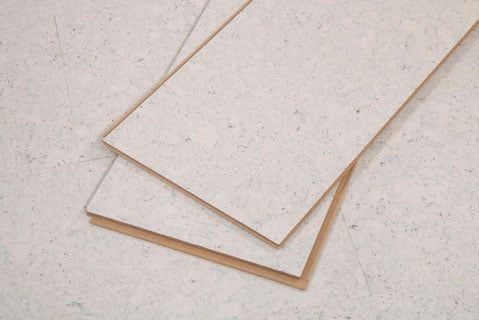
Wide+ Click
11-5/8″ Wide
Plank Dims:
35-5/8″ x 11-5/8″ W x 7/16″ H
Flooring Accessories
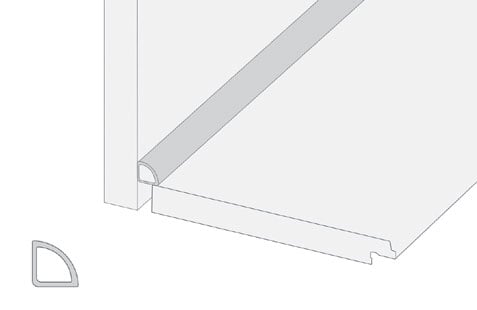
Quarter Round
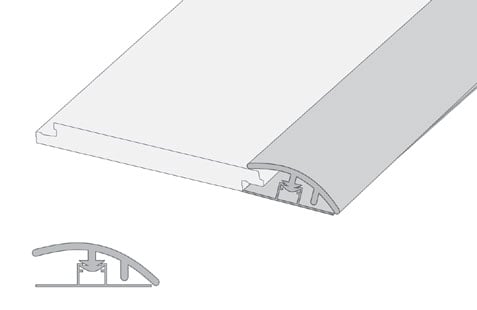
Reducer
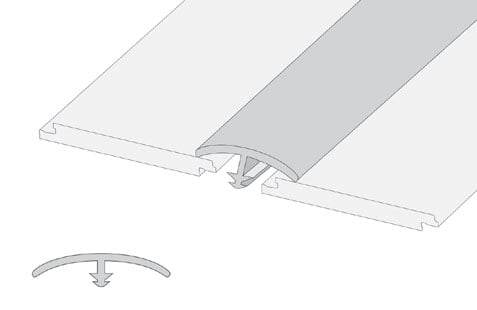
T-Molding
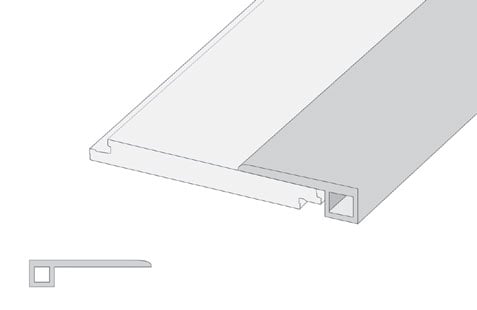
Threshold
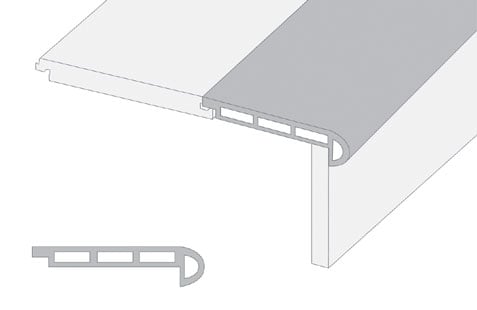
Stair Nosing
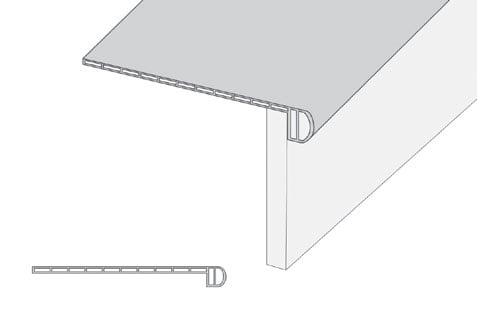
Stair Tread